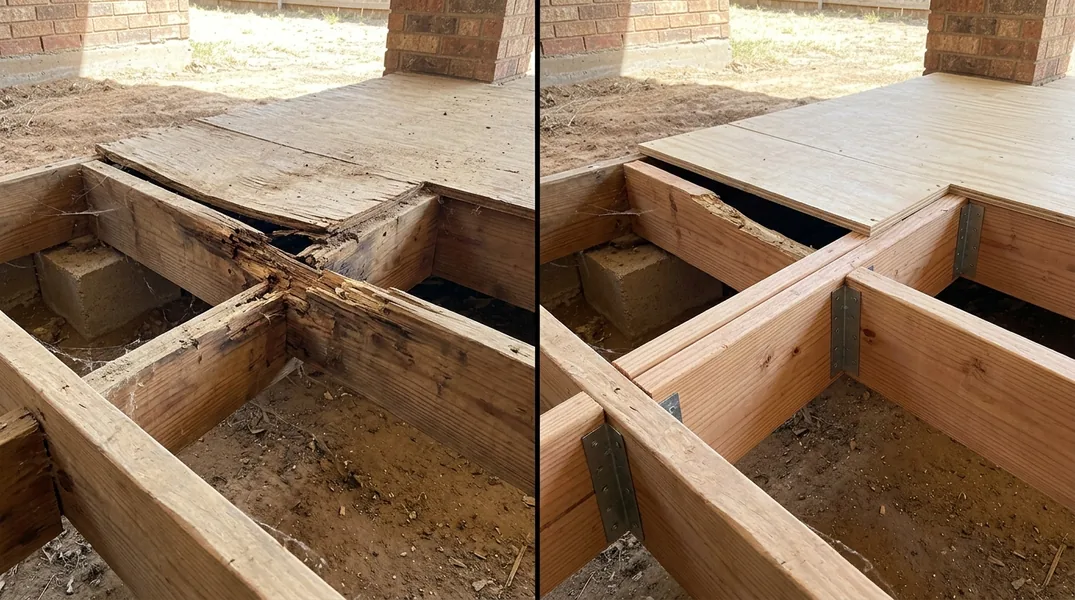
Why Pier-and-Beam Floors Sag: The Root Causes
If you own an older home in Lubbock, chances are good your house sits on a pier-and-beam foundation. This construction method was standard for decades and remains common in our region. Unlike solid concrete slabs, pier-and-beam homes have wooden floor joists supported by concrete piers and wooden beams underneath. While this design offers advantages like easier access to plumbing and electrical systems, it also creates a vulnerability: the wooden structural components can weaken over time, leading to that telltale bounce or slope in your floors.
The primary culprit behind sagging floors is Wood Rot & Dry Rot Repair in the support beams and floor joists. Lubbock's climate can be dry, but moisture still finds its way into crawl spaces through poor drainage, plumbing leaks, or inadequate ventilation. Once wood stays damp for extended periods, fungal decay sets in, gradually eating away at the structural integrity. Another common cause is Termite Damage Repair needs. Subterranean termites tunnel through wooden support members, hollowing them out from the inside. A third factor is simply age and settlement. Wooden beams naturally compress and shift over 50, 60, or 70 years, especially if the home was built on unstable soil or if piers have sunk unevenly.
How to Spot a Sagging Floor Before It Becomes Dangerous
Homeowners often notice sagging floors in subtle ways before the problem becomes severe. You might see doors that no longer close properly or stick when they used to swing freely. Windows might develop cracks around the frames, or you might notice gaps appearing between the walls and ceiling. In kitchens and bathrooms, you may spot cracks in tile or grout, or notice that cabinet doors hang unevenly. The most obvious sign is a visible dip or slope when you look across the floor, though this is usually only apparent when the problem has progressed significantly.
The best way to confirm a sagging floor is to walk slowly across the room and feel for movement or bounciness underfoot. Grab a marble or ball and roll it across the floor. If it rolls toward one wall without you pushing it, that's a clear indicator of slope. You can also use a laser level or a simple carpenter's level to measure the deviation. A slope of more than half an inch over a 10-foot span warrants professional inspection. Don't ignore these warning signs. Continuing to live in a home with a severely compromised floor structure puts you and your family at risk and allows the underlying damage to worsen, driving up repair costs substantially.
Floor Joist & Subfloor Repair: Understanding Your Options
Floor Joist & Subfloor Repair typically involves one or more of three main strategies: reinforcement, sistering, or full replacement. Reinforcement means adding additional support without removing the damaged wood, usually by installing steel beams or wooden posts to carry the load. This approach works well when the existing structure can still bear some weight and the damage is localized. Sistering floor joists is a more common solution for moderate damage. This process involves bolting a new wooden joist alongside the damaged one, effectively doubling the support capacity. The new joist shares the load, allowing the floor to regain its level and stability.
In cases of severe rot or termite damage, full replacement of the affected beam or joist becomes necessary. This is more invasive and costly but essential when the wood has lost too much structural capacity. Modern repair work often incorporates pressure-treated lumber or engineered beams that resist rot and pests far better than the original materials. Some homeowners also choose to upgrade to steel beams during this process, which eliminates future wood-related issues entirely. The right approach depends on the extent of damage, the age of the home, and your long-term plans for the property. A qualified inspector can assess the situation and recommend the most cost-effective solution for your specific circumstances.
Sistering Floor Joists: The Modern Solution for Sagging Floors
Sistering floor joists has become the preferred repair method for many homeowners facing sagging floors in pier-and-beam homes. The technique is straightforward in principle but requires precision in execution. A new joist, typically made from pressure-treated lumber or engineered lumber, is positioned directly alongside the damaged or weakened original joist. Heavy-duty bolts, nails, or metal plates then bind the two joists together, creating a composite beam that's stronger than either piece alone. Because the new joist immediately begins carrying load, the floor often levels out noticeably within days of completion.
The advantages of sistering are significant. The original joist remains in place, so there's less disruption to the home's structure and no need to temporarily support the entire floor from above. The cost is typically lower than complete beam replacement because you're not removing and hauling away large timbers. The work can often be completed in a few days rather than weeks. However, sistering does require crawl space access and careful measurement to ensure the new joist is properly aligned and secured. If multiple joists are damaged across a large area, sistering each one individually may not be practical, and Beam Replacement & Load-Bearing Wall Removal might be more efficient and cost-effective in the long run.
Sagging Floor Repair Cost in Lubbock: What to Budget
The pricing for sagging floor repair varies widely depending on the scope of damage and the repair method chosen. A simple sistering job on a single floor joist might run between $800 and $2,000, assuming minimal rot and straightforward access. If multiple joists need attention or if the damage has spread to the main support beam, costs climb quickly. A full beam replacement in a typical Lubbock home can range from $3,000 to $10,000 or more, depending on beam length, the severity of damage, and whether temporary support structures are needed during installation.
Additional costs may apply if the underlying cause, such as water damage or termite infestation, must be addressed simultaneously. Fixing drainage issues, repairing plumbing leaks, or treating for pests can add $500 to $5,000 to the total project cost. Labor typically accounts for 40 to 60 percent of the repair bill, as this work is labor-intensive and requires skilled carpenters. The best way to understand your specific costs is to request a free estimate from a local contractor who can inspect your crawl space and provide a detailed quote. When comparing estimates, be sure each one addresses not just the floor repair but also the root cause of the problem. Investing in a thorough repair now prevents far more expensive foundation problems down the road.
When to Call a Professional: Don't DIY This Repair
While some homeowners are tempted to tackle floor repairs themselves, sagging floor work is not a DIY project. The structural systems supporting your home are not forgiving of mistakes. Improper sistering can leave joists unbalanced, causing new problems. Inadequate temporary support during beam removal can lead to catastrophic structural failure. Professional carpenters have the experience, tools, and insurance to handle these repairs safely and correctly. They also understand local building codes and can ensure your repair passes inspection.
If you're noticing signs of a sagging floor, the time to act is now. Contact Lubbock Carpentry at (806) 686-3279 to schedule a professional crawl space inspection. Our team specializes in pier-and-beam foundation repairs and can identify the root cause of your floor problems, whether it's wood rot, termite damage, or structural settlement. We'll provide you with honest assessment and clear options, then complete the work to lasting standards. The sooner you address sagging floors, the less damage accumulates and the more affordable your repair becomes. Don't wait until a minor slope becomes a major structural hazard.
Looking for a professional carpentry contractor in Lubbock? Lubbock Carpentry responds fast for all your carpentry needs.
Get a Free QuoteOur services: Wood Rot & Dry Rot Repair · Termite Damage Repair · Floor Joist & Subfloor Repair