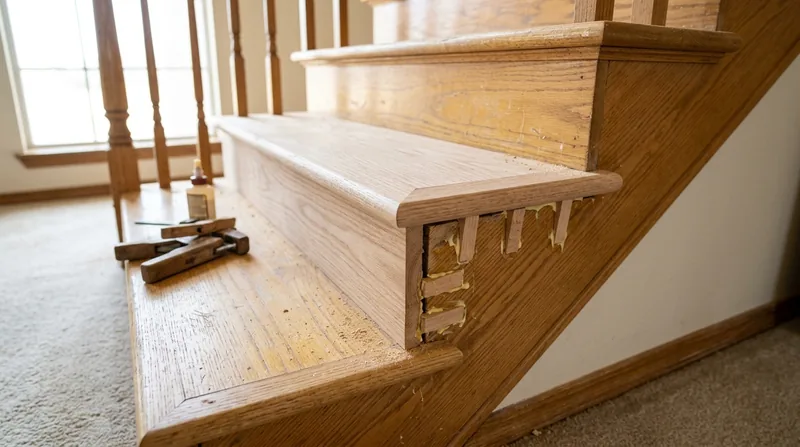




Lubbock's two-story brick homes, Tudor cottages, and split-level ranches built from the 1920s through the 1990s depend on solid stairs and railings for daily safety. The high plains climate here, intense sun, sharp freeze-thaw cycles, very low humidity, and occasional hail, stresses wood joints in ways that loosen treads, crack stringers, and separate balusters from their newel posts. Stair and railing repair in Lubbock restores function and safety to these essential structures without unnecessary replacement. We repair squeaky treads, tighten loose banisters, reinforce worn stringers, and install sturdy handrails and attic access ladders throughout the Lubbock area. Our work is straightforward carpentry: we identify what's loose or damaged, fix it properly, and explain what you're looking at.
Why Stair and Railing Repair Matters in Lubbock's Older Homes
Lubbock's brick bungalows and cottages from the 1930s and 1940s in the Heart and Overton neighborhoods, along with the wood-frame homes in historic Guadalupe, were built with stairs that rely on glued joints and wedged connections. The semi-arid climate here creates a specific failure pattern: heating systems dry the interior air to 20 percent humidity in winter, causing wood to shrink and joints to loosen. Treads creak, banisters rattle, and stringers can separate from their support walls. A loose stair is not just annoying, it's a safety hazard that worsens over time if left unaddressed.
- We tighten loose treads by re-gluing and re-wedging the joint between tread and stringer, restoring a solid step underfoot.
- We repair split or cracked stringers by reinforcing with additional support or sistering new wood where the damage is structural.
- We rebuild loose baluster-to-rail connections by re-wedging or replacing fasteners that have worked themselves loose over decades.
- We install modern handrails and attic ladders where older homes lack adequate safety equipment or access.
- We restore period railings in historic homes, matching original profiles and joinery when the bones of the staircase are sound.
Addressing stair issues promptly prevents further deterioration and keeps your home safe for family and guests.
Local example: A 1940s brick cottage in Tech Terrace had treads that squeaked audibly on every step. The stringers had pulled slightly away from the wall framing due to wood shrinkage. We re-secured the stringers to the wall, re-glued and re-wedged the treads, and the stairs are now solid and silent. No replacement needed, just proper carpentry.
How We Repair and Restore Stairs in Lubbock Homes
Every staircase repair starts with a careful inspection of the treads, stringers, balusters, newel posts, and handrails. We identify where joints have loosened, where wood has checked or split, and whether the underlying structure is sound enough to repair or needs replacement. Our approach is always to repair first if the wood and framing justify it. We work methodically, re-gluing joints, re-wedging treads, reinforcing stringers, and testing each connection before we call the job complete. For older homes across Lubbock and nearby towns like Wolfforth and Shallowater, this hands-on approach preserves the character of the original staircase while restoring safety and function. You can read more about our broader finish carpentry services for related trim and interior work.
- We inspect the entire staircase assembly, checking stringers, treads, risers, balusters, rails, and fastening points for movement or damage.
- We disassemble loose connections carefully, clean out old glue and debris, and reassemble with modern adhesive and proper wedging.
- We reinforce split stringers or treads by adding sister boards or internal bracing where the wood is still structurally sound.
- We test every step and railing connection before finishing, ensuring the staircase is safe and stable for daily use.
- We install new handrails, balusters, or attic ladders where code or safety requires them, matching the style of your home.
This systematic repair method keeps your stairs functional and safe without the cost and disruption of full replacement.
Real repair in Lubbock: A 1970s ranch in Lakeridge had a handrail that had pulled loose from the wall framing over forty years of use. We removed the handrail, re-anchored the mounting brackets to solid framing, and reinstalled it securely. The homeowner now has a safe, code-compliant handrail without replacing any original woodwork.
Repair Methods and When to Use Each
| Repair Method | What We Do | Best For |
|---|---|---|
| Re-gluing and re-wedging joints | Disassemble loose connections, remove old adhesive, apply modern wood glue, and re-wedge treads and balusters to stringers and rails. | Squeaky treads, loose balusters, rattling handrails where the wood structure is intact. |
| Stringer reinforcement and sistering | Add sister boards or internal bracing to cracked or split stringers, securing them to the wall framing and treads. | Damaged stringers, split treads, and sagging stairs where the core structure can be reinforced. |
| Handrail installation and repair | Install new handrails or balusters, re-anchor loose railings to solid framing, and ensure code-compliant spacing and strength. | Missing or unsafe railings, loose handrails, stairs lacking proper fall protection. |
| Period railing restoration | Carefully repair and restore original balusters, newel posts, and rails to match historic profiles and joinery. | Historic homes in Heart, Overton, Tech Terrace, and Guadalupe where original character must be preserved. |
| Attic ladder installation | Install pull-down attic access ladders, ensuring safe operation and secure mounting to ceiling framing. | Homes needing safe attic access or improved storage convenience. |
Stair and Railing Repair Cost in Lubbock: What to Expect
The cost of stair and railing repair in Lubbock depends on what's wrong, how much work is needed, and whether you're repairing or replacing components. A simple re-gluing and re-wedging job on squeaky treads or a loose baluster might start around $600 to $1,200 for a modest staircase. Reinforcing damaged stringers, installing new handrails, or restoring period railings will cost more because the work is more involved and may require custom carpentry. The size of your staircase, the extent of damage, and whether the staircase is interior or exterior all affect the final price. Access and the condition of the surrounding framing matter too. If you need a full staircase replacement, that's a larger undertaking and will be priced accordingly. We recommend getting two or three estimates so you can compare scope and pricing. Our pricing page offers more detail on typical jobs and factors that influence cost.
Stair and Railing Repair Near Me: What Lubbock Homeowners Should Know When Hiring
Finding the right carpenter for stair and railing repair in Lubbock means looking for someone who understands wood, joints, and safety, and who can explain what's wrong and why. Ask any contractor whether they're fully insured and can provide proof of coverage. Get at least two or three estimates so you understand the scope and can compare approaches. Check references from recent jobs and ask to see examples of similar work. If your stairs are part of a historic home in neighborhoods like Overton or Guadalupe, ask whether the contractor has experience with period restoration and can match original profiles and joinery. Some staircase work, particularly if it involves structural changes or load-bearing modifications, may require a building permit. Contact your local Lubbock building department to verify what applies to your project. If you live in an HOA community in Kelsey Park or Wolfforth, check your deed restrictions before making changes to railings or handrails. We're happy to discuss your staircase over the phone and provide a free, no-obligation estimate. Call us at (806) 686-3279 or visit our contact page to get started.
Stair & Railing Repair in Lubbock: Pricing Guide
| Service | Price | Details |
|---|---|---|
| Tread re-gluing and re-wedging | Starting at $600 | Tighten loose treads on a modest staircase, includes glue, wedges, and testing; larger stairs cost more |
| Baluster and railing repair | Starting at $800 | Re-secure loose balusters, handrails, or newel posts to stringers and rails; cost varies by number of connections |
| Stringer reinforcement or sistering | Starting at $1,200 | Repair split or cracked stringers with sister boards or internal bracing; price depends on damage extent and access |
| Handrail installation or attic ladder | Starting at $900 | Install new handrails, balusters, or pull-down attic access ladders; cost includes materials, labor, and code compliance |
| Full staircase inspection and repair plan | On estimate | Complex or large-scale jobs require on-site evaluation to determine exact scope, materials, and labor before pricing |
| Estimate and consultation | Free | No-obligation estimate with response within 24 hours at (806) 686-3279; includes initial inspection and scope discussion |
Indicative pricing, the exact cost depends on square footage, finish, and site access. Free personalized estimate within 24h at (806) 686-3279.


