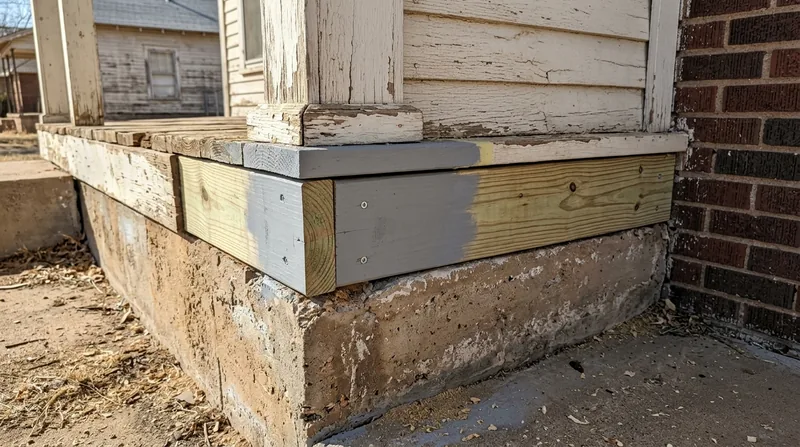




Lubbock sits on the flat, treeless Llano Estacado under an enormous sky and intense high-plains sun, where the real threat to wood isn't humidity but the water that gets trapped inside it. Hail cracks roofs. Leaking plumbing and sprinkler overspray soak rim joists, sill plates and subflooring. Freeze-thaw swings open joints and let moisture work deeper. When that water stays put, decay follows, even in the dry air. Wood rot and dry rot repair in Lubbock means cutting out the decayed framing, treating the surrounding wood, and rebuilding with rot-resistant lumber. It's a permanent fix, not a cosmetic patch. We work on the 1920s brick bungalows and Tudor Revival cottages near downtown and Texas Tech, the 1930s cottages and early ranches across Tech Terrace with their wood porches and detached garages, the modest wood-frame homes in Guadalupe, the 1960s and 1970s long ranches with wide eaves and wood fascia around Lakeridge and Melonie Park, and the newer two-story subdivision homes spreading south through Kelsey Park and Wolfforth. If wood is wet and decaying, we find it, explain what caused it, and repair it right.
Why Wood Rot and Dry Rot Matter in Lubbock's Climate
Lubbock's semi-arid climate does not produce rot on its own. The city averages less than 20 inches of rain yearly and the air stays dry most of the year. But that dry air is deceptive. Hail is frequent and violent here, shattering roof tiles and shingles and opening long cracks that let water pour into attics and walls. When that water finds wood framing, it stays wet long enough to decay, especially in poorly ventilated crawlspaces and enclosed porch areas where air doesn't circulate. Plumbing leaks, landscape sprinkler overspray, and clogged gutters all contribute. The wood doesn't rot from outside humidity. It rots from inside moisture that gets trapped and has nowhere to dry.
- Hail-damaged roofs let water into the rim joist and top plates of walls, where it stays hidden for months.
- Sprinkler systems and landscape drainage push water against the sill plate and subfloor on the south and west sides of the house.
- Plumbing leaks under kitchens and bathrooms saturate the floor joist and subfloor until the wood softens and loses strength.
- Crawlspaces with poor drainage or no vapor barrier trap moisture under the house, causing decay in the underside of rim joists and band joists.
- Freeze-thaw cycles open joints and cracks, allowing water to penetrate deeper into the wood each winter.
Once rot starts, it spreads quietly. The wood loses structural capacity long before it looks bad on the surface. That is why inspection and early repair matter.
Key info: In Lubbock's brick bungalows and older cottages, rot most often starts at the sill plate where the brick veneer meets the wood frame, or in the rim joist where water from a hail-cracked roof runs down the interior of the wall. Catching it early costs far less than waiting for the wood to lose strength.
For more on related structural damage, see our guide to floor joist and subfloor repair.
How We Repair Wood Rot: Step-by-Step Process in Lubbock
Rot repair is not a surface fix. We cut out all the decayed wood, go back to solid material, treat the surrounding framing to stop the rot from spreading, and rebuild with lumber that resists decay. The process is straightforward but requires precision and attention to the details that caused the rot in the first place.
- We inspect and probe the affected wood with a screwdriver or awl to find the full extent of decay, which often goes deeper than the eye can see.
- We cut out all soft, discolored or spongy wood back to solid material, creating clean edges for the repair patch.
- We treat the surrounding wood with a borate preservative to stop fungal growth and prevent the rot from spreading into sound framing.
- We rebuild the removed section with rot-resistant lumber, usually pressure-treated Douglas fir or redwood, cut and fitted to match the original framing.
- We address the source of moisture: we may redirect downspouts, improve crawlspace ventilation, or advise on landscape grading and sprinkler placement.
- We seal the repair with paint or stain to protect the new wood from weather and UV.
The goal is not to hide the problem but to solve it. If the rot was caused by a roof leak, a plumbing failure, or poor drainage, we can advise on those fixes, though plumbing and roofing are outside our scope. We repair and replace the wood.
Real example: A homeowner in Tech Terrace noticed soft wood at the base of an exterior wall on the west side of their 1940s cottage. We found rot in the sill plate and rim joist caused by years of landscape sprinkler overspray. We cut out the decayed wood, sister new pressure-treated lumber to the rim joist, replaced the sill plate, and advised the owner to adjust the sprinkler spray pattern away from the house. The repair took two days and cost less than half what a full rim joist replacement would have run.
For structural repairs that go beyond wood rot, see beam replacement and load-bearing wall removal.
Repair Methods and When to Use Each
| Approach | Description | Best for |
|---|---|---|
| Selective cut-out and patch | Remove only the decayed section, treat the cut edges, and rebuild with new pressure-treated lumber sistered or fitted into place. | Rot confined to a small section of rim joist, sill plate, or trim, where the rest of the framing is sound. |
| Sistering a beam or joist | Cut out the decayed section and bolt a new pressure-treated joist or beam alongside the remaining sound wood to restore load capacity. | Rot in a floor joist or beam where removing the entire member would require temporary support and more expense. |
| Full member replacement | Remove the entire decayed joist, rim joist, or beam and install a new one, with temporary support in place during the work. | Rot extends along most of a structural member or decay is so severe that patching would not restore adequate strength. |
| Exterior trim and siding repair | Cut out rotted fascia, soffit, casing or siding boards and replace with rot-resistant lumber or composite materials, sealing all joints. | Decay in exterior trim, porch trim, or siding where the structural framing behind it remains sound. |
Wood Rot and Dry Rot Repair Cost in Lubbock: What to Expect
The cost of wood rot and dry rot repair in Lubbock depends on how much wood is decayed, where it is located, how easy it is to access, and whether the repair is a simple patch or requires sistering or full member replacement. A small, localized rot repair in an accessible area may run from $650 to $1,200. Larger jobs involving multiple joists, extensive rim joist replacement, or work in tight crawlspaces can run $2,500 to $6,000 or more. Full structural member replacement with temporary support can exceed $8,000.
Several factors move the cost up or down. Access matters: rot in a basement or crawlspace is easier and cheaper to reach than rot hidden inside a wall. The size and number of affected members matter: one rotted joist costs far less than three. The type of lumber and the size of the member matter: replacing a 2x12 floor joist costs more than replacing a 2x8. Whether the work requires temporary shoring and whether it affects load-bearing members also affect cost. If the repair involves addressing the moisture source, such as improving drainage or redirecting sprinklers, that adds to the scope but prevents future rot.
The best way to get an accurate number is to call us for a free estimate. We will inspect the damage, explain what caused it, show you the repair options and their costs, and let you decide. We respond within 24 hours at (806) 686-3279. See our pricing page for more detail on typical jobs.
Wood Rot and Dry Rot Repair Near Me: What Lubbock Homeowners Should Know When Hiring
Choosing the right carpenter for wood rot repair is about more than price. You need someone who understands the local climate, the age and construction of Lubbock homes, and the specific failure modes that cause decay here. You also need someone who will explain the problem clearly, propose repair before replacement, and address the root cause of the moisture.
When you are evaluating contractors, ask to see examples of past repairs. Request references from recent jobs in Lubbock or nearby towns like Wolfforth, Shallowater or Levelland. Verify that the contractor is fully insured and ask for a certificate of insurance. Get estimates from at least two or three contractors so you can compare scope, materials and price. Ask each one why they recommend their approach and whether they have seen similar decay patterns in Lubbock's older homes.
If the repair involves a load-bearing wall or significant structural change, ask whether a permit is required. Rules vary by jurisdiction, so check with your local building department to confirm. If you live in a historic district or under HOA restrictions, verify that your repair plan complies with those guidelines before you start. We can help you understand what permits and approvals may be needed, and we work with your local building department to get the job done right.
Call us at (806) 686-3279 or contact us online for a free estimate and a straightforward conversation about your wood rot repair.
Wood Rot & Dry Rot Repair in Lubbock: Pricing Guide
| Service | Price | Details |
|---|---|---|
| Small rot repair, localized patch | Starting at $650 | Includes removal of decayed wood, borate treatment, and pressure-treated patch in accessible areas like fascia or trim |
| Medium repair, single joist or rim section | Starting at $1,800 | Includes cut-out of decayed framing, sistering or replacement of one floor joist or rim joist section, and moisture source assessment |
| Large repair, multiple members or crawlspace work | Starting at $4,500 | Includes removal and replacement of multiple joists or beams, temporary shoring, crawlspace access, and drainage improvement recommendations |
| Full structural member replacement with support | On estimate | Extensive decay affecting load-bearing members requires on-site inspection to determine shoring needs, permit requirements, and final scope |
| Travel and estimate | Free | No call-out fee or travel charge in Lubbock and surrounding areas. Response within 24 hours at (806) 686-3279 |
Indicative pricing, the exact cost depends on square footage, finish, and site access. Free personalized estimate within 24h at (806) 686-3279.


