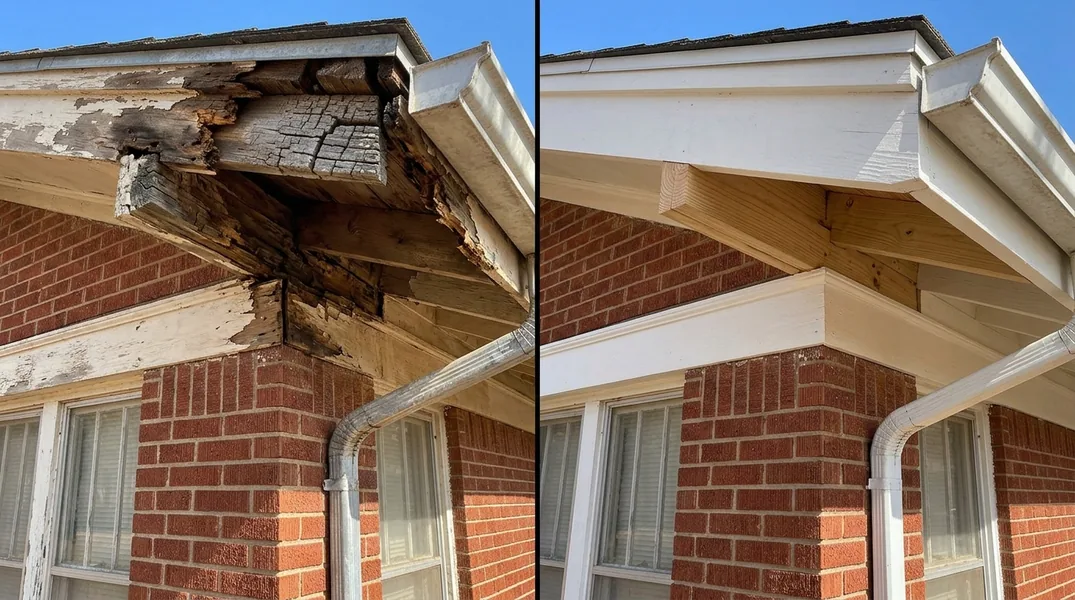
Understanding Wood Damage: Rot, Hail, and Splits
Wood damage comes in many forms, and not all of it requires a full replacement. Homeowners in Lubbock often face a mix of challenges: rotting wood from moisture exposure, hail-damaged trim from severe storms, and stress splits from temperature swings and UV exposure. Understanding what you're dealing with is the first step toward making a smart repair decision.
Rotted wood is compromised at the cellular level by fungal decay. It becomes soft, discolored, and loses structural integrity. Hail damage, by contrast, creates dents, cracks, and splintering on the surface of otherwise sound wood. Split wood typically occurs when wood shrinks unevenly as it dries or expands and contracts with seasonal temperature changes. Each type of damage requires a different approach, and each has a different threshold for whether repair makes sense or replacement is the better investment.
When Can You Repair Rotted Wood Without Replacing It?
The good news is that not every instance of Wood Rot & Dry Rot Repair requires tearing out the entire board or section. If rot is caught early and affects only a small surface area (typically less than 10 percent of the wood's cross-section), repair is often a viable and cost-effective option. The process usually involves removing the decayed portion with a chisel or rotary tool, treating the area with a wood hardener and fungicide, and filling the void with epoxy wood filler or a two-part wood putty. Once cured and sanded smooth, the repaired section can be stained and sealed to match the surrounding wood.
Epoxy-based repairs are durable and can last for years when applied correctly, especially if the underlying moisture problem is addressed. However, this approach works best on non-structural elements like trim, fascia, and decorative beams. If rot has penetrated deep into a load-bearing joist, beam, or wall stud, repair alone is not safe. In those cases, structural integrity is at stake, and replacement or reinforcement becomes necessary. The key is having a trained eye to assess the damage accurately, which is why consulting with professionals serving Lubbock early can save you money and headaches.
Hail-Damaged Wood Trim: Repair or Replace?
Lubbock's spring and summer storms can leave hail-damaged wood trim in their wake. The question most homeowners ask is whether a dented or cracked board needs to come down. The answer depends on the severity of the damage and the board's visibility and function. Minor cosmetic dents on wood trim that isn't visible from the street or main living areas can often be left as-is or filled with wood putty and touched up with paint or stain. If the damage is purely surface-level and doesn't compromise the board's ability to shed water or protect the underlying structure, repair is usually the sensible choice.
However, hail damaged wood trim that has deep cracks, splinters, or areas where the finish is severely compromised may be better replaced. Cracks allow moisture to penetrate, which can lead to rot over time. If the trim is a prominent architectural feature (like fascia, soffit, or window casings), replacement often looks cleaner and more professional than a visible repair. Additionally, if the damage is widespread across multiple boards, replacing the entire run of trim is usually more cost-effective than patching several individual sections.
Replace Rotted Wood Siding: When Repair Isn't Enough
Siding bears the brunt of weather exposure, making it vulnerable to rot. When you discover soft spots, discoloration, or visible decay in your siding, the decision to replace rotted wood siding depends on how much of the board is affected and whether the rot has spread to the sheathing or framing behind it. If rot is limited to one or two boards and the underlying structure is sound, replacing just those sections is a practical solution. This approach preserves the integrity of your home's weather barrier while keeping costs manageable.
However, if rot has penetrated multiple boards or has reached the sheathing and framing, you're facing a more extensive and expensive repair. Rotted siding is often a symptom of a larger moisture problem, such as poor drainage, gutter failure, or inadequate ventilation. Simply replacing the siding without addressing the root cause means the problem will return. This is where professional assessment becomes invaluable. A qualified carpenter can identify whether the rot is superficial or systemic and recommend whether targeted board replacement or a more comprehensive solution is necessary.
Wood Rot & Dry Rot Repair Cost in Lubbock: What to Budget
Understanding wood rot repair pricing helps you plan your budget and make informed decisions. Minor epoxy repairs on small areas of trim or fascia typically cost between $200 and $500, depending on accessibility and the amount of wood that needs to be removed and filled. Replacing a single damaged board or section of siding generally ranges from $300 to $800, again depending on the material, size, and location. More extensive repairs involving multiple boards or structural elements can easily exceed $1,500 to $3,000 or more.
The cost difference between repair and replacement is often smaller than homeowners expect, especially when you factor in labor time. Sometimes a full board replacement is only slightly more expensive than a high-quality repair, and it offers the advantage of a uniform appearance and renewed protection. Additionally, addressing rot promptly prevents it from spreading, which can save you thousands in future repairs. If you're unsure whether repair or replacement makes sense for your specific situation, Lubbock Carpentry offers a free estimate to help you understand your options and the true cost of your repair project.
How to Prevent Future Damage: Maintenance Tips
The best repair is the one you never have to make. Preventing wood rot, hail damage, and splits starts with regular maintenance and proactive care. Keep gutters clean and ensure downspouts direct water away from your home's foundation and siding. Maintain proper ventilation in attics and crawl spaces to reduce moisture buildup. Seal and stain exterior wood every two to three years to protect against UV damage and water penetration. Trim tree branches that hang over your roof to reduce the risk of storm damage and allow better air circulation around your home.
If you notice early signs of rot, such as soft spots, paint bubbling, or discoloration, address them immediately. Early intervention is far less expensive than waiting until the damage spreads. Similarly, after severe weather events, conduct a thorough inspection of your siding, trim, fascia, and roof. Catching hail damage and stress cracks early allows you to make repairs before moisture penetration creates bigger problems. For homeowners in Lubbock who want professional guidance on maintenance or need repairs, calling Lubbock Carpentry at (806) 686-3279 is a smart first step. We can help you develop a maintenance plan and address damage before it becomes a structural concern.
Looking for a professional carpentry contractor in Lubbock? Lubbock Carpentry responds fast for all your carpentry needs.
Get a Free QuoteOur services: Wood Rot & Dry Rot Repair · Termite Damage Repair · Floor Joist & Subfloor Repair