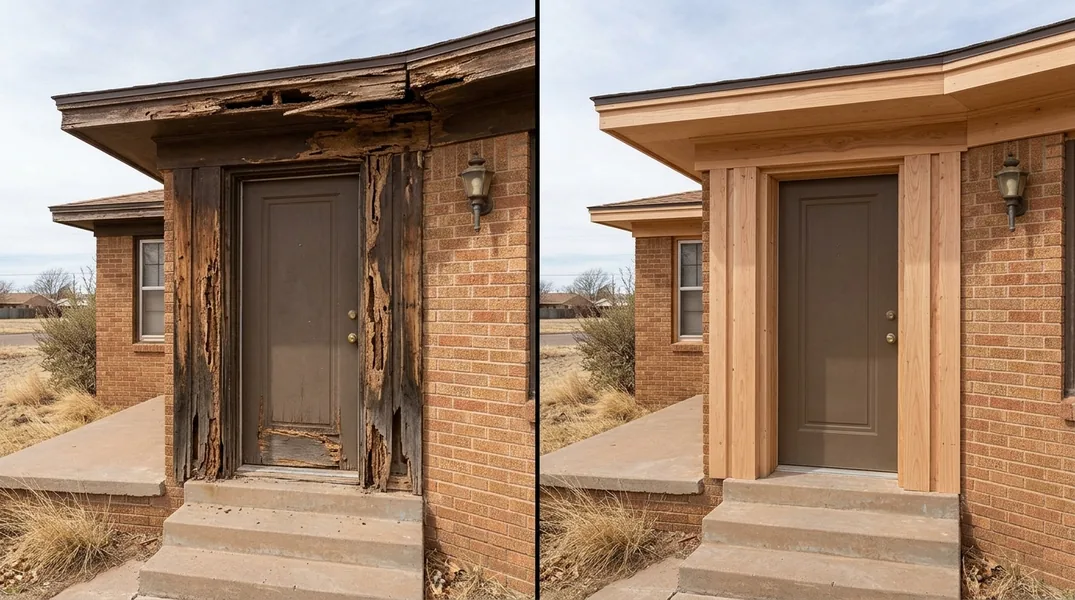
Dry Rot vs Termite Damage: Why It Matters for Your Lubbock Home
If you've noticed soft spots in your wood framing, crumbling baseboards, or suspicious damage around your foundation, you're facing one of the most common questions homeowners in Lubbock ask: is this dry rot or termite damage? While both conditions can compromise your home's structural integrity, they require completely different treatment approaches. Misidentifying the problem could leave you vulnerable to ongoing damage, costly repairs, or both.
The South Plains climate, with its dry summers and occasional moisture problems, creates an environment where both dry rot and termites can thrive. Understanding the difference between these two wood-destroying forces is essential for protecting your investment. This guide will help you recognize the telltale signs of each problem so you can take swift action and call in the right specialist.
What Does Wood Rot Look Like? Identifying Dry Rot Damage
Wood Rot & Dry Rot Repair starts with accurate identification. Dry rot, also called wood decay, occurs when wood moisture content rises above 20 percent, allowing wood-destroying fungi to colonize the wood fibers. The result is wood that becomes brittle, shrinks, and develops deep cracks that form cube-like patterns on the surface. When you press an infected area with a screwdriver or your fingernail, the wood crumbles easily, leaving a powdery residue that feels almost like dust.
The appearance of dry rot varies depending on the fungus species and the wood type affected. You might notice wood that has turned gray, brown, or even reddish in color. The affected wood often pulls away from surrounding healthy wood, creating visible gaps. In advanced stages, the wood becomes so compromised that it loses all structural strength. Unlike termite damage, which typically follows wood grain patterns and leaves galleries or tunnels, dry rot damage appears more random and widespread across the wood surface. If you spot these signs in your Lubbock home, moisture control and professional treatment are critical next steps.
Signs of Termite Damage in Wood: What to Look For
Termite damage tells a different story than dry rot. Termites are insects that consume wood from the inside out, leaving the outer shell intact while hollowing out the interior. This creates a distinctive pattern of galleries or tunnels that follow the grain of the wood. When you tap on wood affected by termites, it often sounds hollow, even if the surface looks relatively normal. The damage is often hidden beneath paint, siding, or soil, which is why termites can cause extensive harm before homeowners even realize they have a problem.
One of the most telling signs of termite activity is the presence of mud tubes. Subterranean termites, the most common species in Texas, build narrow mud-colored tubes from the soil to the wood they're feeding on. These tubes protect the termites from dry air and predators as they travel. You might also notice small piles of sawdust-like droppings called frass near affected wood, or witness winged termites swarming during spring and fall. Unlike the deep cracks and cube-like pattern of dry rot, termite damage creates a network of clean tunnels and galleries that follow the wood grain. If you see these signs, Termite Damage Repair should be your priority to prevent further structural compromise.
Key Differences: How Dry Rot and Termite Damage Compare
Understanding the key differences between dry rot vs termite damage helps you communicate more effectively with repair professionals and understand what you're dealing with. Dry rot is a fungal disease that requires moisture to develop, while termites are living insects that need moisture but can cause damage even in relatively dry conditions. Dry rot typically progresses slowly over months or years, while termite colonies can cause significant damage in just a few months. Dry rot damage tends to be concentrated in areas with high moisture, such as bathrooms, crawl spaces, and areas around leaks. Termite damage, by contrast, can appear anywhere they can access food (wood), from your attic to your basement to your porch.
The visual damage patterns also differ significantly. Dry rot creates deep, perpendicular cracks that form a distinctive cube-like or checkered appearance on the wood surface. The wood becomes powdery and crumbly. Termite damage, on the other hand, creates clean, smooth tunnels and galleries that follow the grain of the wood. The exterior surface may look intact even though the interior is hollowed out. When it comes to treatment, dry rot requires eliminating moisture and removing affected wood, while termite damage requires both wood replacement and ongoing termite control measures to prevent reinfestation. Knowing these distinctions will help you understand why your repair approach needs to be tailored to the specific problem.
Where These Problems Typically Occur in Lubbock Homes
Both dry rot and termite damage tend to concentrate in specific areas of your home, and knowing where to look can help you catch problems early. Dry rot most commonly appears in crawl spaces, basements, around plumbing penetrations, near roof leaks, and in poorly ventilated attics. Any area where wood remains damp for extended periods becomes vulnerable. In Lubbock homes, this often includes areas affected by ice dam leaks during winter or water intrusion from heavy rains. Foundation walls, sill plates, and Floor Joist & Subfloor Repair areas are particularly susceptible to dry rot when moisture control is inadequate.
Termites, meanwhile, typically enter homes at or below ground level. They're attracted to wood that touches soil or comes close to it. Foundation walls, sill plates, deck posts, fence lines, and any wood in contact with soil are prime targets. Subterranean termites may also travel up through Floor Joist & Subfloor Repair areas and into wall cavities. Since the South Plains region has experienced termite problems for decades, many older homes in Lubbock have existing damage that wasn't properly treated. Regular inspections of these vulnerable areas can catch problems before they become catastrophic.
When to Call a Professional: Getting Help Near You
If you've identified signs of either dry rot or termite damage in your home, professional assessment is essential. While minor surface issues might seem manageable, both problems can spread rapidly and compromise structural safety if left untreated. A trained carpenter or pest professional can conduct a thorough inspection, determine exactly what you're dealing with, and recommend the appropriate repair strategy. Structural issues like compromised Beam Replacement & Load-Bearing Wall Removal should never be tackled without professional guidance.
Lubbock Carpentry specializes in identifying and repairing both wood rot and termite damage throughout the Lubbock area. Our experienced team can distinguish between these problems, assess the extent of damage, and provide you with a clear plan for restoration. We understand the unique challenges that South Plains homes face and have the expertise to handle everything from minor repairs to major structural restoration. Don't wait until damage becomes severe. Contact us today at (806) 686-3279 for a free estimate and let us help protect your home's structural integrity.
Looking for a professional carpentry contractor in Lubbock? Lubbock Carpentry responds fast for all your carpentry needs.
Get a Free QuoteOur services: Wood Rot & Dry Rot Repair · Termite Damage Repair · Floor Joist & Subfloor Repair