Do You Need a Permit for Carpentry Work in Lubbock?
If you're planning a carpentry project in Lubbock, one of the first questions you should ask is whether you need a building permit. The short answer is: it depends on the scope and nature of your work. Most structural modifications, interior renovations, and wall removal projects do require a permit from the City of Lubbock. Skipping this step might seem like a way to save time and money, but it can lead to serious complications when you sell your home, file an insurance claim, or face inspection violations.
The permit process exists to protect you and your family. Building inspectors ensure that work meets current safety codes, electrical standards, and structural requirements. When you obtain a permit, you're not just following the rules; you're getting professional oversight that catches potential problems before they become expensive disasters. Whether you're dealing with Wood Rot & Dry Rot Repair that requires structural reinforcement or planning a major renovation, understanding permit requirements is essential.
When Do You Need a Lubbock Building Permit?
The Lubbock Building Department requires permits for most projects that involve structural changes, electrical work, plumbing modifications, or significant interior alterations. Common projects that require permits include adding or removing walls, installing new windows or doors, replacing roofing, creating new rooms, and modifying load-bearing structures. If you're replacing damaged wood due to Wood Rot & Dry Rot Repair that affects the home's structural integrity, you'll almost certainly need a permit for that work.
Minor repairs and cosmetic work typically don't require permits. Painting, replacing trim, fixing drywall holes, or minor carpentry that doesn't affect the structure usually falls into this category. However, when in doubt, it's better to contact the Lubbock Building Department to verify. The cost of obtaining a permit is usually minimal compared to the risk of facing fines, having to redo work, or dealing with title issues when selling your home.
Is My Wall Load Bearing? Understanding Load-Bearing Wall Removal
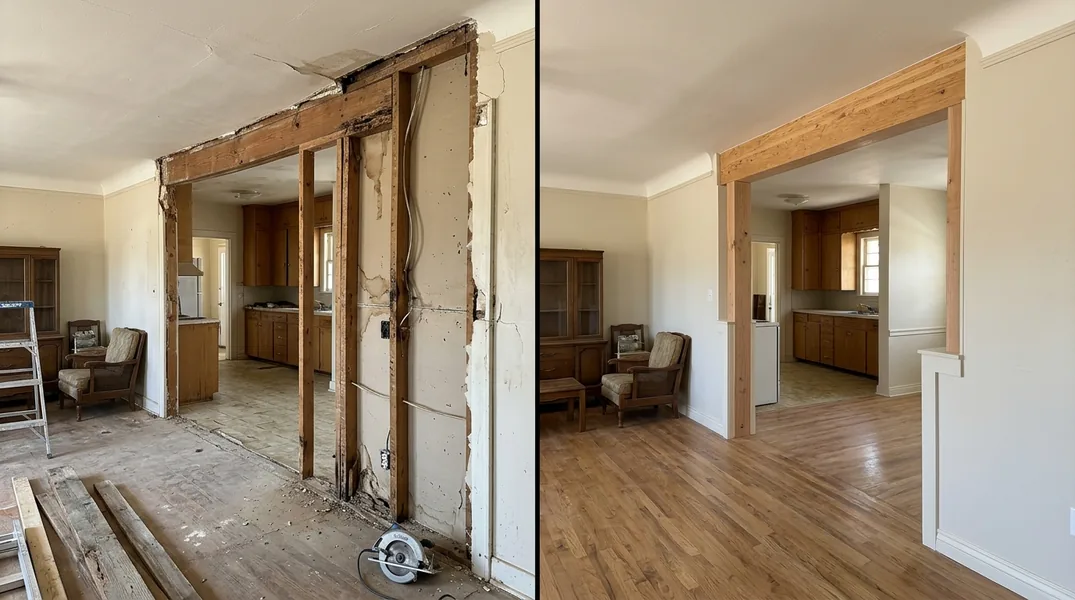
One of the most critical questions in any wall removal project is whether the wall is load-bearing. A load-bearing wall supports the weight of the structure above it, including the roof, upper floors, and everything in between. Removing a load-bearing wall without proper support is extremely dangerous and will cause structural failure. This is why Beam Replacement & Load-Bearing Wall Removal projects require both a permit and professional engineering.
You can't determine if a wall is load-bearing just by looking at it. Several factors indicate load-bearing walls: they typically run perpendicular to floor joists, they're positioned over other walls or beams in the basement, they run parallel to the roof ridge, or they're located near the center of the home. If a wall runs the length of the house or sits directly above a basement support beam, it's almost certainly load-bearing. The only way to be certain is to have a structural engineer inspect your home. This inspection is a required part of the permit process for any wall removal in Lubbock.
When a load-bearing wall must be removed, it needs to be replaced with a beam that can handle the load. The size and type of beam depend on the span, the weight it must support, and local building codes. Installing the wrong size beam or failing to provide adequate support creates a hazard that could affect your home's safety for years. This is specialized work that requires professional expertise and absolutely cannot be done without a permit.
Do I Need a Permit to Remove a Wall in Lubbock?
The answer to whether you need a permit to remove a wall is almost always yes, and here's why. Even if a wall isn't load-bearing, removing it changes the structure of your home and affects building systems like electrical wiring, plumbing, HVAC ducts, and fire-blocking. The building department needs to inspect the work to ensure all these systems are properly addressed and that the modification meets current codes.
If the wall contains electrical outlets, switches, or lighting fixtures, an electrician will need to relocate or cap off those circuits safely. If it has plumbing, those pipes must be rerouted. If it contains structural elements like headers or posts, those must be addressed. Additionally, if removing the wall creates a larger open space, the flooring system may need reinforcement. Projects involving Floor Joist & Subfloor Repair often go hand-in-hand with wall removal when the floor structure has settled or been damaged.
The permit process for wall removal typically involves submitting plans showing what you intend to do, having a structural engineer evaluate the situation and design any necessary support, and then having inspectors review the work at various stages. This multi-step process protects you and ensures the work is done correctly. Attempting to remove a wall without a permit can result in fines, orders to restore the wall, and difficulty obtaining a building permit for future work.
The Permit Process: What to Expect in Lubbock
The typical permit process in Lubbock starts with submitting an application to the Building Department. You'll need to provide detailed plans or drawings of the work you plan to do, including dimensions, materials, and how the project will be executed. For wall removal or structural work, you'll need engineering drawings prepared by a licensed structural engineer. The Building Department will review these documents to ensure they comply with the International Building Code and local ordinances.
Once your permit is approved, you can begin work. However, the process doesn't end there. Building inspectors will visit your site at various stages to verify that the work is being done according to the approved plans and codes. For wall removal, you can typically expect inspections before work begins, after framing is complete, and after final finishing. Only after passing all inspections will the project receive final approval. This staged inspection process catches problems early and ensures quality workmanship.
The timeline for permits varies depending on the complexity of your project. Simple permits might be approved in a few days, while complex structural projects could take several weeks. The free estimate process with a qualified contractor includes discussing permit requirements and timelines, so you know what to expect before starting. Professional contractors in Lubbock are familiar with local permit requirements and can guide you through the process smoothly.
Why Working with a Insured Contractor Matters for Permitted Work
When you're undertaking permitted carpentry work in Lubbock, working with a fully insured contractor is invaluable. Insured contractors understand local building codes, know what permits are required, and have relationships with inspectors and engineers. They can help you navigate the permit process, prepare necessary documentation, and ensure work is completed to code. If problems arise during inspection, experienced contractors know how to address them quickly and correctly.
A reputable contractor will also handle the permit paperwork for you, coordinate inspections, and take responsibility for the quality of the work. If your project involves structural concerns like Wood Rot & Dry Rot Repair that requires reinforcement, or complex work like Beam Replacement & Load-Bearing Wall Removal, having a professional contractor is not just convenient, it's essential for safety and compliance. Lubbock Carpentry has the expertise to handle permitted work correctly from start to finish. Call us at (806) 686-3279 to discuss your project and learn about our process.
Looking for a professional carpentry contractor in Lubbock? Lubbock Carpentry responds fast for all your carpentry needs.
Get a Free QuoteOur services: Wood Rot & Dry Rot Repair · Termite Damage Repair · Floor Joist & Subfloor Repair