Carpenter in Lubbock, TX: Wood Rot, Structure & Finish Work
Homeowners searching for a carpenter near me in Lubbock turn to Lubbock Carpentry for the full range of residential wood work: wood rot and dry rot repair, structural framing, and finish carpentry from trim and doors to custom built-ins and stairs. We serve Lubbock, Wolfforth, Shallowater, and surrounding areas on the South Plains, working on everything from the brick bungalows and pier-and-beam cottages near downtown and Texas Tech to the long ranches around Lakeridge and the newer two-story subdivisions spreading south and west. The same carpenters do your work, and they know how this building stock settles, how the high-plains climate stresses wood, and what a century of use looks like in the frame.
Whether you have found soft wood in a sill or fascia, discovered termite damage after a pest inspection, or noticed a floor that has gone bouncy or out of level, we approach the work the same way: diagnose what happened, explain it plainly, and propose repair when the wood justifies it or replacement when it does not. Call (806) 686-3279 to schedule a free wood rot inspection, or send us a message with photos and we will give you an honest read of what you are looking at.
Why Wood Fails in Lubbock, and How We Read It
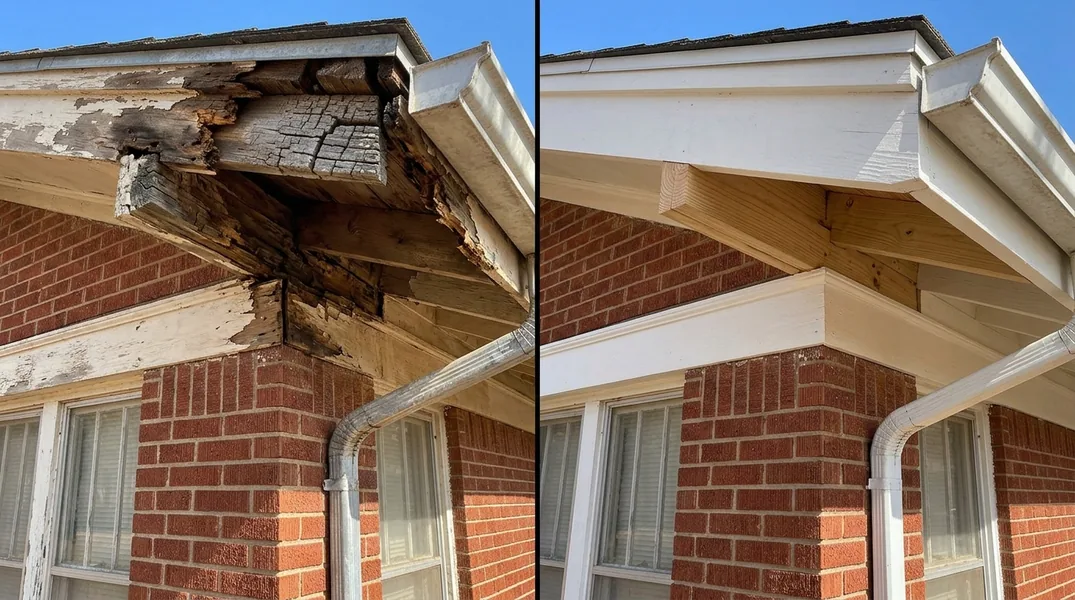
Wood fails here in predictable ways, and none of them happen the way people think. The South Plains sits under an enormous sky and intense high-plains sun, with very low humidity and sharp freeze-thaw swings that check and split boards and open joints. Yet wood rot thrives here anyway, because water finds its way in: through hail-damaged roofs and siding, leaking plumbing, sprinkler overspray, and poorly drained crawlspaces and slab edges. Dry rot is a fungus that needs sustained moisture, not standing water or humidity in the air. Wet rot settles at thresholds, window sills, deck ledgers, and sill plates where water sits and the wood stays damp. Termites, present on the South Plains but far less aggressive than in humid East Texas, tunnel through framing from the inside while the paint film overhead looks sound, and beetles do the same. All three are found where wood stays wet, and all three mean the water source has to be closed or the repair fails again.
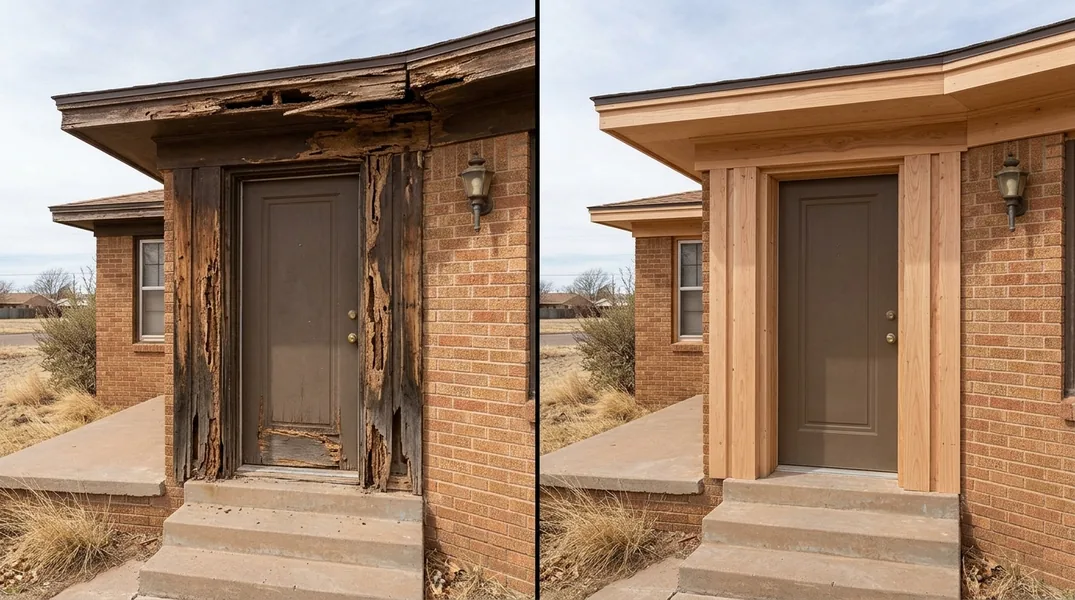
We read rot the way it actually announces itself: by probing to find where sound wood begins, by checking the framing and structure behind the visible surface, and by following the water path that fed it. Cosmetic surface decay on a sound member can be cut out and the section rebuilt with new wood. A member that has lost its load-bearing section gets replaced. Filler over rot is not a repair; it is a promise to come back in five years. On termite or beetle damage, we work from your own pest inspection report and repair or replace the damaged wood. We do not treat, fumigate, or perform pest control, which is a separate regulated trade. If you have had a pest inspection that found damage, bring that report and we will tell you what the wood looks like and what it costs to fix. Call (806) 686-3279 to get started, or request a free inspection and we will come look at it with you.
The cost to address rot or termite damage depends entirely on how far it has gone. Surface decay in a fascia board or a deck rail may be a cut-and-rebuild for a few hundred dollars. A sill plate that has lost its section, or a floor joist that has been hollowed, means replacement and a larger bill. A beam that supports the house has to be right, and that costs what it costs. We quote the work honestly, and we do not dramatize what you are looking at. A soft spot in a floor is not an emergency, and it is not a reason to panic; it is a reason to look at it promptly and understand what is driving it so you can make a plan.
Structural Carpentry in Lubbock: Joists, Beams and Settling
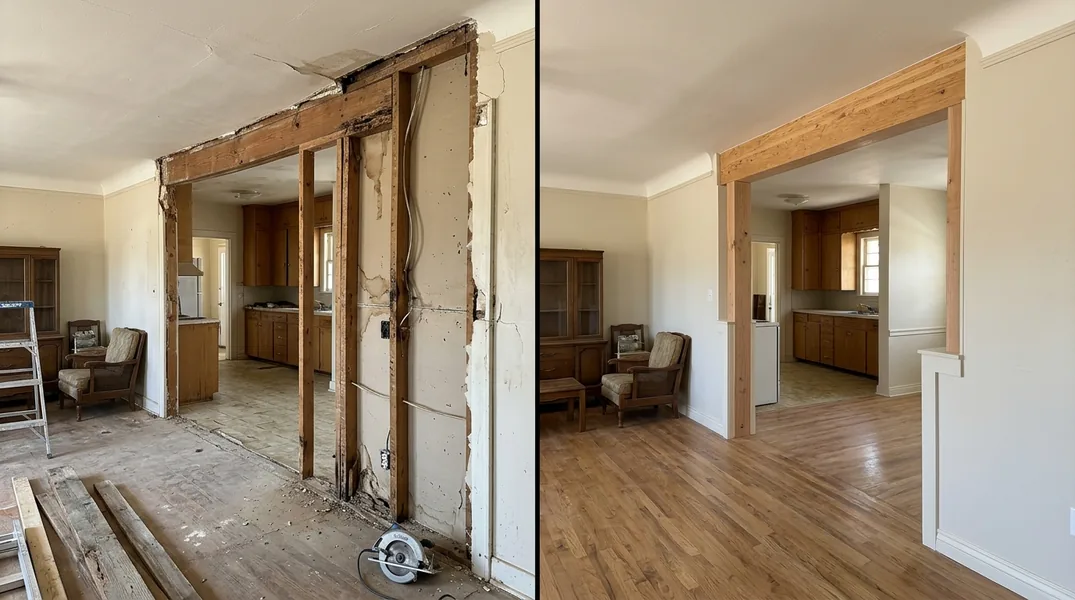
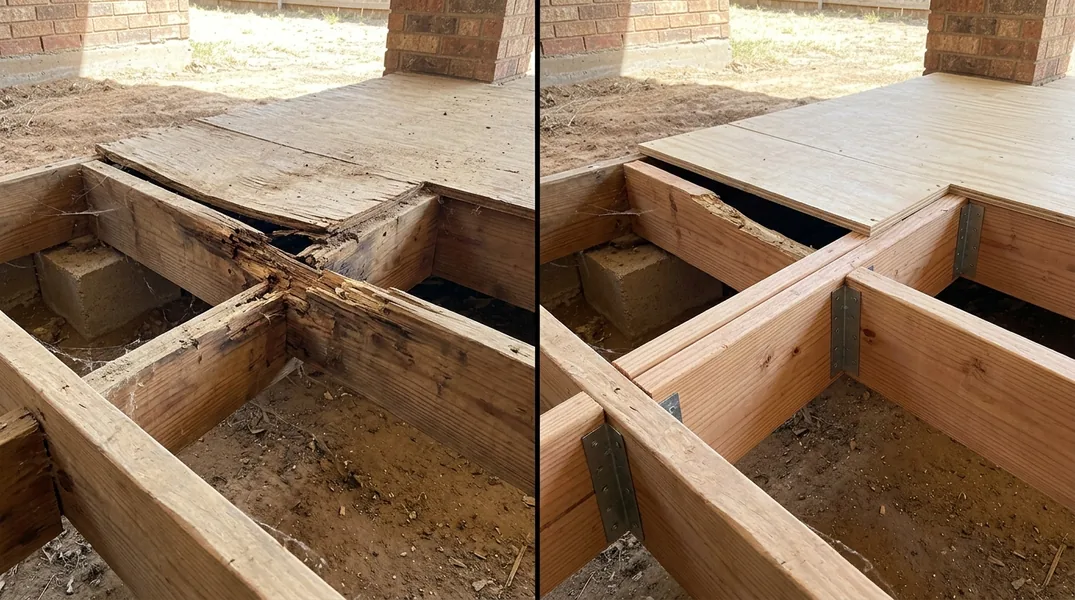
Floor joist and subfloor repair is the most common structural work we do in this housing stock. The brick bungalows and cottages near downtown sit on pier-and-beam foundations that have settled over a century, and the wood that bears on those piers can rot or be eaten by insects where it stays damp. Sometimes a single joist can be sistered alongside the old one to restore its strength; sometimes a section of subfloor can be cut out and replaced without touching the framing below. Other times the member has to come out entirely and be rebuilt or replaced. We assess each one individually and propose the honest answer. Sloping floors and sticking doors are the normal condition in a house that has settled slowly over decades, and they do not mean something is failing now. What matters is whether the member is still sound where it bears, and whether something is still moving. Beam replacement and load-bearing wall removal are bigger undertakings: they commonly require drawings from a licensed structural engineer and a permit from the local building department. We build to those engineered drawings and work within the permit process, but we do not produce the engineering ourselves.
Sill plates, rim joists, and headers all fail in the same way: water gets in, wood stays damp, and the wood loses its strength. We replace these members when they have to be replaced, and we do the work so that the new wood is set right and the water source is closed. If the water source is not addressed, the repair fails. That conversation happens up front, and it shapes the scope and the cost. A new sill plate is only part of the solution if the crawlspace is draining water against the foundation or a roof is leaking into the rim joist.
Finish Carpentry and Built-Ins in Lubbock Homes
Finish carpentry in Lubbock homes means working around bay windows, compact floor plans, and openings that are neither square nor plumb. The older stock near downtown and Tech Terrace has original baseboard, casing, and crown molding worth matching rather than replacing, and we do that work by hand: coped joints instead of caulked corners, scribing to walls that have settled, consistent reveals, and profiles that read right against the original millwork. Interior doors, crown molding and baseboard, wainscoting, and custom built-ins and shelving all demand the same attention to detail: the work should disappear into the room and look like it has always been there.
Cabinet and vanity installation, stair and railing repair, and exterior door installation follow the same logic. We measure twice, cut once, and fit the work to the house rather than forcing the house to fit the work. In a century-old bungalow with back stairs and a settled frame, that means understanding how the original carpenters solved the same problem, and either matching that solution or improving it honestly.
Permits, Repair-or-Replace & What We Do Not Do
Permits are commonly required for structural work such as removing or altering a load-bearing wall, replacing beams or floor joists, and installing or altering stairs and exterior decks. Requirements vary by jurisdiction and depend on the scope of the work. When a permit is needed, we work within the permit process and build to any engineered drawings or specifications required by the local building department. The Lubbock building department can tell you whether a permit applies to your specific project, and we recommend verifying requirements before work begins. We are fully insured and can help you document damage for an insurance claim, though we cannot promise coverage or make any claim about whether work will be approved under your policy.
On the practical question of repair versus replacement, the answer comes down to three things: how much sound section is left in the member, whether the water source or pest entry point can be closed, and what the two approaches cost. We quote both options when both are real, and we explain what makes sense for your situation. A repair that leaves the water source open is not a repair; it is a delay. Replacement costs more upfront but solves the problem. We give you both numbers and let you decide. Requirements vary, and thresholds and rules differ between jurisdictions, so always verify with the Lubbock building department before starting your project.